I enjoyed this one a lot. I got a good laugh from one part…
At the end of the interview, the person asks what is next for King Gizzard. As the question is being asked, Stu’s face lights up and he gets a twinkle in his eye. Leaning into the mic with a devilish smile, he authoritatively declares in a deadpan: “TECHNO.”
It would be gif-worthy if not for the microphone covering his lips.
Some records have been made primarily on tour, others have been made entirely off tour. It varies. Right now we are still in a phase of bringing in ideas from the universe. It could still go a lot of ways. We’ve probably got more material written now without having a finished thing than we ever have. I’m not sure that’s good. I think that’s actually bad.
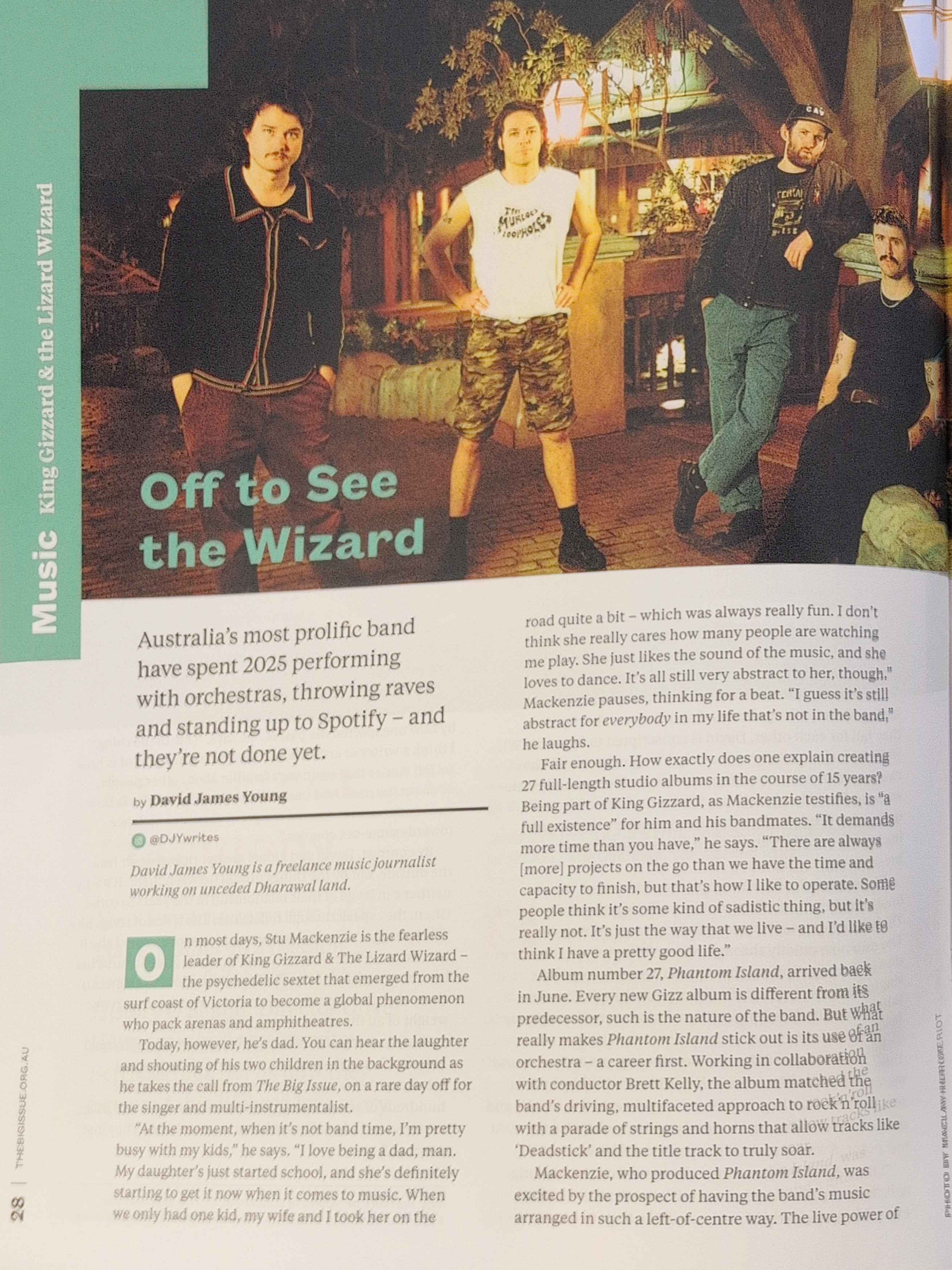
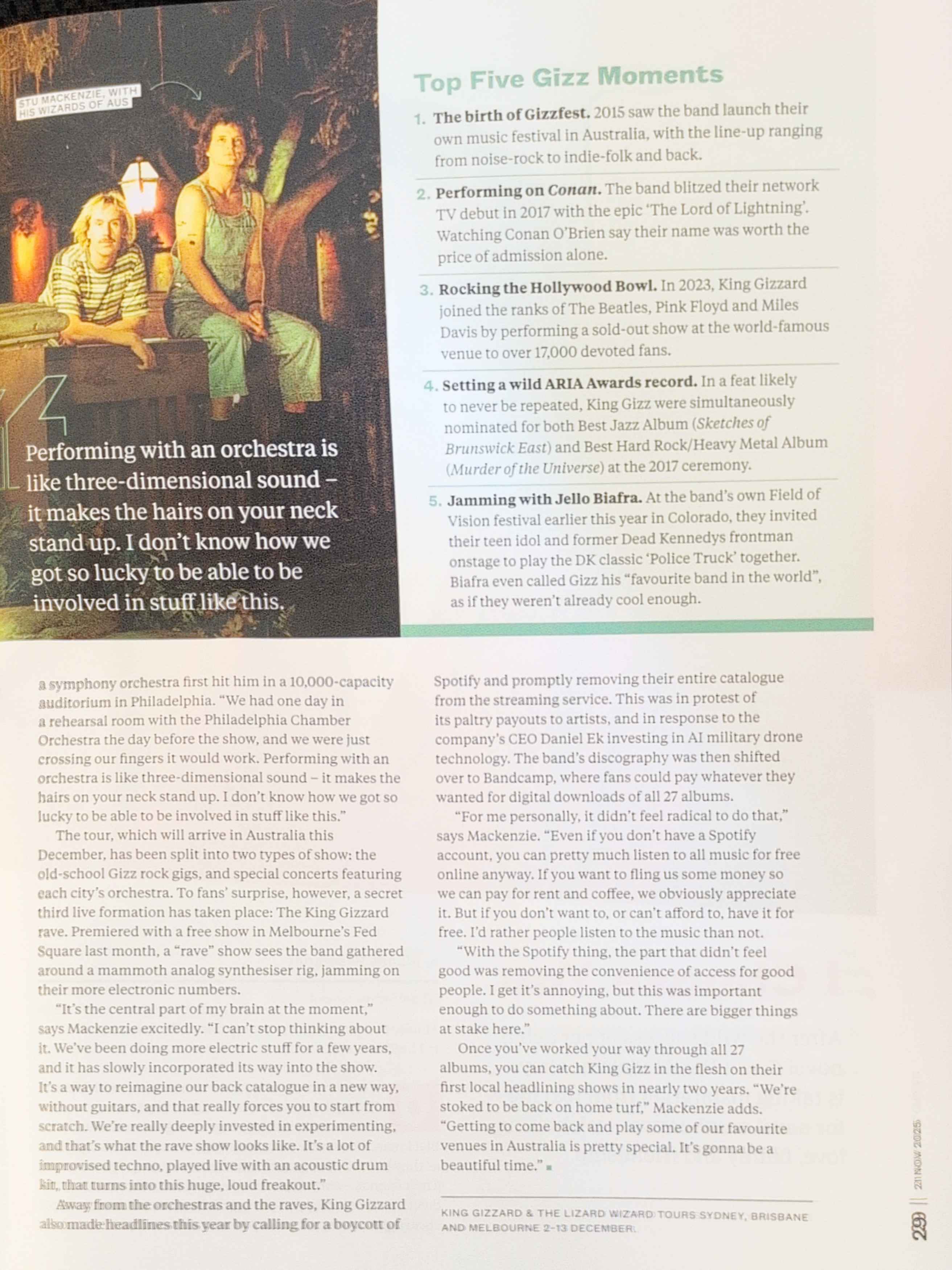
Quite a quote from Stu at the end of this one. He says we’re all doomed.
There’s a new blog on Bandcamp that namechecked KGLW (linked below). Seems like only a matter of time before there’s some more in-depth kglw content. Here’s to hoping, I enjoy the author’s writing style.
Here’s a VERY early one!
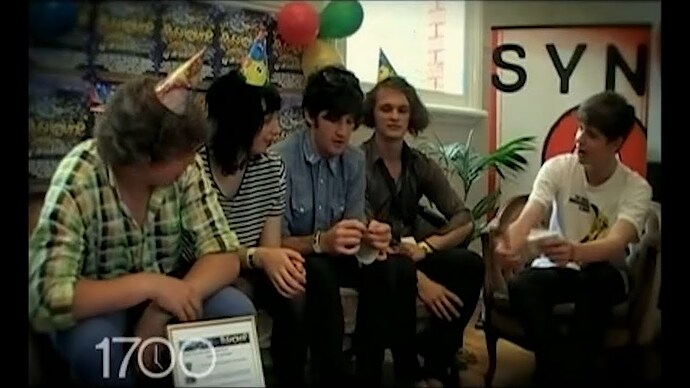
Interesting panel on DIY music production featuring Stu and Eric.

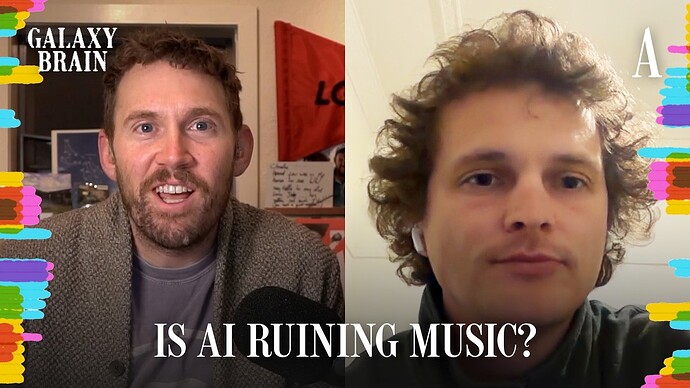
Transcript version: Is AI Ruining Music? - The Atlantic
from the same e-mail announcing Cavs’ Sojourn, a brief microtonal Q&A:
Interview by Şebnem Altunkaya with Stu Mackenzie
Şebnem Altunkaya is a Turkish PhD researcher with The Amplification Project at the University of Huddersfield (UK), funded by the Leverhulme Trust. Her work on Anatolian Psychedelic Rock explores the politics of amplification and the global revival of microtonal and psychedelic folk traditions — tracing how sound technologies and tuning systems become sites of resistance, belonging, and cultural memory.
- On microtonal exploration
Your microtonal work seems to emerge from a curiosity about musical systems beyond the tempered Western scale. What were the most memorable moments, records, or encounters that first drew you into these tuning worlds and influenced you as a musician?
- Yes, I would say I’m a fairly curious guy ha ha. And why would you temper something when it comes to art…? Give it to me raw and wriggling!
- The bağlama and microtonal guitars
In one of your interviews, you’ve mentioned experimenting with the bağlama to access
microtonal spaces on electric guitar. How did this engagement influence your compositional or textural choices? How did it shift the way you think about melody, harmony, or rhythm?
- The bağlama fully blew my mind when I first played it. I guess it was the first microtonal music I had played (purposefully). It forced me to think about sound and harmony in a new way. A more fundamental way. I’ve come full circle and now appreciate what equal temperaments can do for us, but to open up that world felt like discovering a new palette of colours. Inspiring stuff.
- Amplification as political force
Amplification can shape how people experience sound collectively, creating spaces where social or political dynamics are felt as much as heard. How do you see amplification operating as a political or social force in your work — in performance, community, or sonic experimentation?
- I’m not sure I’ve ever thought of amplification as political, but I know that it works literally and metaphorically to make our voices louder. I know rock concerts can be a space for folks to exist in a parallel universe where what really matters is connection and love. That feels powerful and is a responsibility I take pretty seriously.
- Amplification as creative force
Beyond politics, I often think of amplification as world-building — shaping space, emotion, and shared experience. How do you approach it as part of your creative philosophy? Does it carry ritualistic or ecological significance?
- I think I’ve been doing this crazy shit for so long I don’t think of it like that too often. I tend to just “do” it, you know? I try hard to be honest, open-hearted and generous and hope that the rest follows from there. In saying that, its pretty exciting to see a stage come together and in that sense it certainly feels like world-building. Like I was saying earlier - parallel universes…
- Psychedelia as political practice
King Gizz’s psychedelia often seems to do more than evoke the past — it shapes how listeners experience sound, space, and time. In that sense, it can feel like a practice of perception rather than nostalgia. How do you see this approach? How do you think psychedelic music today carries political or ecological stakes, or offers a space for reflection, resistance, or healing?
- hmmmm… This is probably not something I feel comfortable pontificating on. I am willing to give my energy to the listener and I am also willing for the listener to perceive that in their own completely unique way. I don’t think music has to be psychedelic to do that.
- Identity and belonging
Your shows often feel like temporary communities — chaotic but safe, transcendent yet
grounded. How do you think about identity and belonging within these spaces, both for the band and your audience? Is creating that collective intensity intentional?
- Thank you! Creating a safe and inclusive space for folks to get freaky in is really important to me and the other gizzards and sometimes hard to pull off. We try really hard! Mostly I think it’s about validating and uplifting those folks who exist outside the sphere of “normal”. If you can make your space feel like home for minorities, women, LGBTQI+, folks with disabilities, first nations and more then the others people (like me!) should also feel at home. And I guess if cis white men don’t feel at home in a space like that it might be for the best that they stay at home and don’t crash the party ha ha
- Revival, lineage, and contemporary world politics
Across psychedelic and folk movements, revival can be both musical and political. How do you navigate these ideas — reviving or reimagining lineages — especially in a contemporary global context with pressing political and ecological crises?
- Generally we are following something more invisible and fleeting than that. I think its called muse… But we do try to handle the lineage that we are on with care and grace. It’s good to recognise and pay respects to those who came before you and support the younger folks too.
- Field of Vision and current collaborations
Your Field of Vision curation, including Gaye Su Akyol and upcoming shows with Kit Sebastian, suggests dialogue with global folk-psychedelic scenes. What draws you to these artists? How does collaborating with these artists enable shared experimentation or political imagination across these spaces?’
- Gaye and Kit make awesome and inspiring music - to be honest it’s mostly that! And we all listen to fairly broad music and would love our festival to reflect that. It feels important to platform folks from different backgrounds to your own. If you’ve got a mic you should pass it
- Looking forward
What kinds of sonic experiments — in tuning, instrument-building, or cross-cultural dialogue — are exciting you most at the moment?
-
Making techno and bluegrass at the moment. Not at the same time. Well… not yet…
THANK YOU SO MUCH STU!!! LOVE YOU
Riv on the Record: Stu Mackenzie (frontman of King Gizzard and the Lizard Wizard) - Surf Coast Times
Australian shows confirmed for this year
Not an interview with the band, but very much of interest, nonetheless!
What’s next for Stu Mackenzie?
I’m looking forward to spending some more time in the studio this year.
We don’t really have a lot of shows coming up which is like the first time we’ve slowed down since the pandemic.
Aside from US tour and a few Aussie shows throughout the year it’ll be low key. Maybe a show at the Anglesea Football Netball Club?
oh, come on
It might be 10 years old, but the Juice is now loose.